
 Back to Blogs
A Homeowner’s Guide to Snow Removal from Your Roof
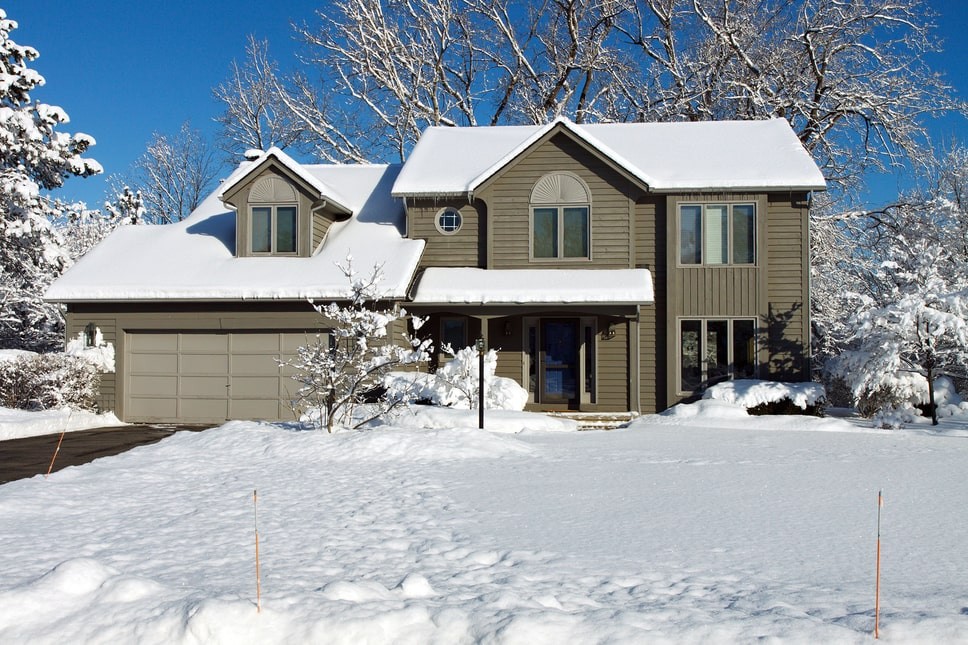
A fresh layer of winter snow might look beautiful, but every Mason City homeowner knows it means yardwork sooner rather than later. On top of shoveling snow away from your porch and out of your driveway, it’s a good idea to head up for a roof inspection after a heavy storm. Depending on just how much snow has accumulated, you may need to perform some roof snow removal to prevent leaks, broken shingles, and more.
Not sure where to start? Read on!
Winter roof damage from snow
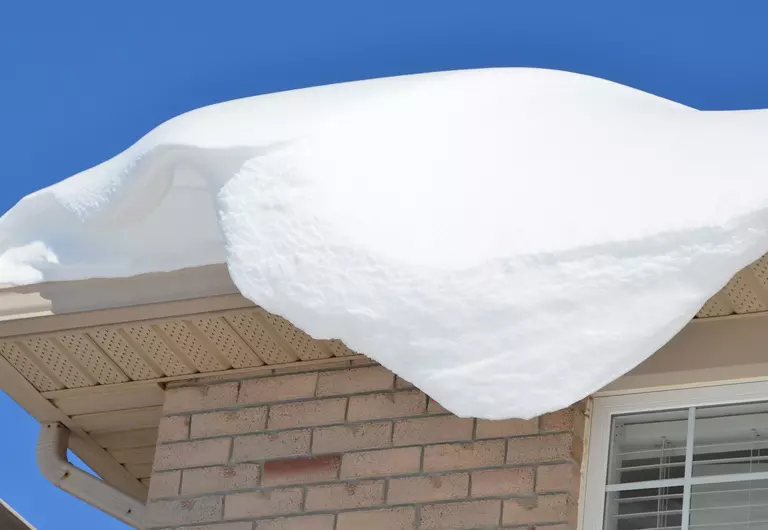
Heavy snow can do a number on your roof, even if it’s designed for durability and constructed with sturdy shingles. Snow gets heavy after several inches, and too much snow can weigh your roof down, leading to depressions, roof collapse, or dripping leaks inside the house.
Of course, snow pileup on your roof might also lead to shingle damage. Standard asphalt shingles can become worn down, cracked, or soaked through so much that they break come spring. Wood shingles, too, can suffer damage as the snow melts and turns to water.
Another cause of roof damage from snow is your gutters. Gutters and downspouts can suffer ice dams, which are likely to occur if snow on your roof melts during the day and then refreezes at night. Ice dams can cause your gutters to sag or even break off, creating hazards around your home. On top of these possible problems, heavy snow on roofs can lead to:
- Mold and rot
- Blistering of roof materials
- Dangerous icicles
Put simply, it’s never a good idea to let snow stick around for too long.
When to remove snow from your roof
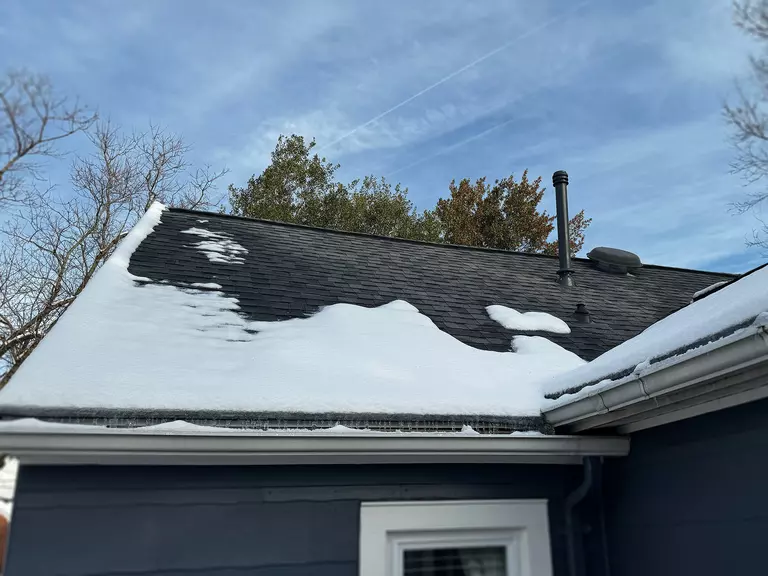
Not sure how long you should wait? If you’re a new Mason City homeowner or are inexperienced with rooftop maintenance in the winter, you might wonder when it’s appropriate to practice snow removal from your roof and when you can safely let a few inches melt under the sunshine.
There are two good rules of thumb to follow:
- First, if total snowfall is only an inch or two, you don’t need to worry so much about snow removal from your roof. But if a surprise storm dumps inches upon inches of snow on your home, plan on getting rid of that snow ASAP.
- Second, if temperatures will rise sharply in a day or so, it’ll likely melt fast enough that it won’t cause damage to your roof. The reverse is true if you experience heavy snowfall and temperatures are projected to stay below freezing for a while to come. In these cases, you are your roof’s only chance to avoid damage.
Snow removal from a roof – key tips
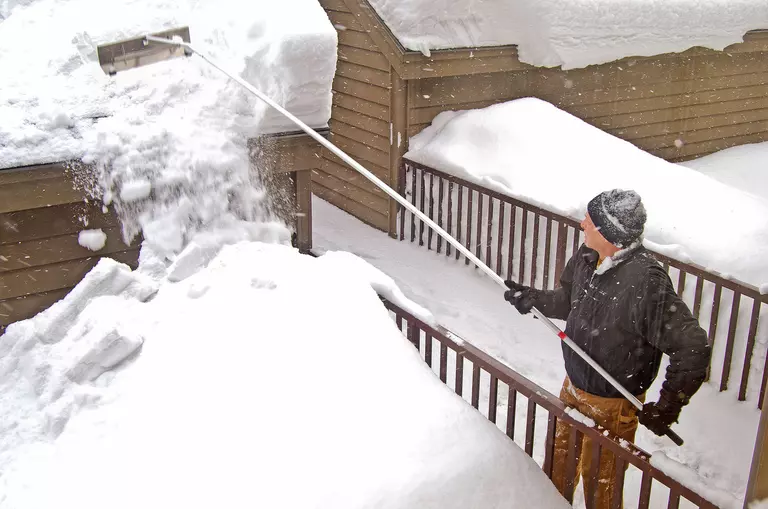
Roof snow removal has some similarities with shoveling snow away from your driveway, but the task has its own particulars to keep in mind.
Buy a roof rake
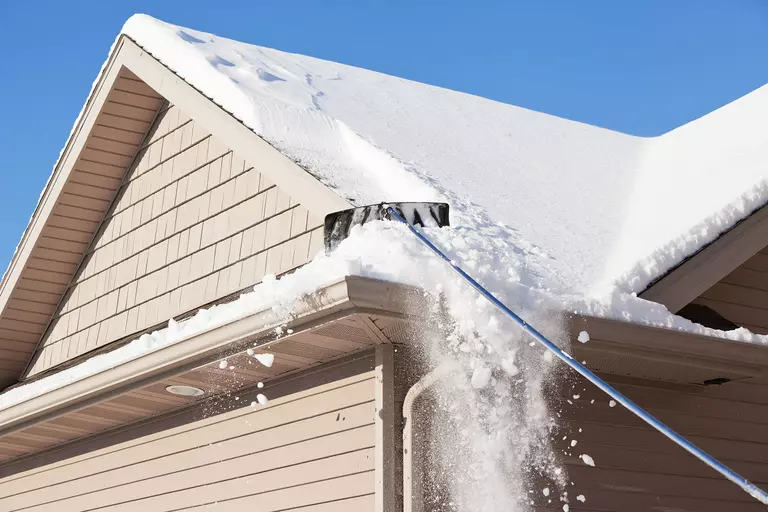
When it comes to your roof, snow removal is most effective when using a roof rake tool. A roof rake is a long, handheld tool that lets you scrape snow off your roof safely from the ground. You can usually find roof rakes at home improvement stores, and they’re much better solutions for this job compared to long brushes or shovels.
When using a roof rake:
- Always begin at the edges of your roof to move snow away, then gradually progress “up” or toward the center of your roof.
- Move snow off your roof in "layers" or a few inches at a time. This ties into one of our other tips below and makes it easier to avoid bringing an avalanche of ice down over your head!
Stay on the ground while removing snow if you can
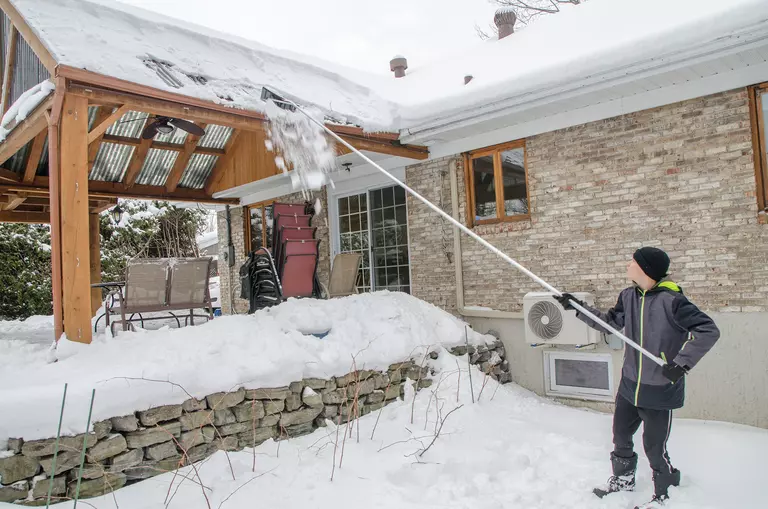
Since you’ll be using a roof rake, this next step should be easy: try to stay on the ground while raking. If you absolutely must, you can climb a ladder to get to snow that’s further from the edges. But ladders can be dangerous to use, even if you’ve climbed up them before. In general, it’s best to accomplish as much roof snow removal from the ground as possible.
Never use harsh chemicals or heat
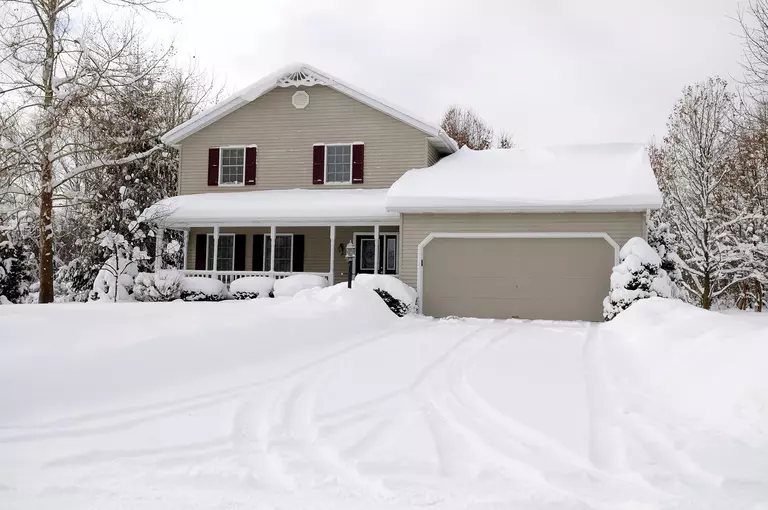
Harsh chemicals can degrade your roof or even mix with snowmelt, running down the sides of your house and ruining your siding or paint. Even if it may seem convenient, we don’t recommend using harsh snow removal chemicals to get the job done.
The same goes for heated methods, like torches or hot water. If the weather’s cold, hot water and melted snow might actually cause damage to your roof or become a hazard to you and others outside as it refreezes.
The one exception? Certain roof melt pellets, though these aren’t ever needed for normal homes. Removing snow the “old-fashioned way” with a rake is always the better choice.
Clear out your gutters and downspouts
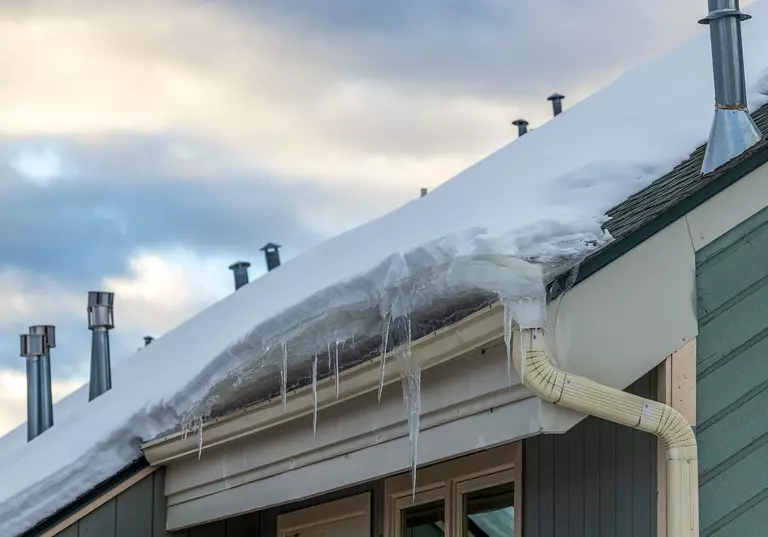
Don’t forget to clean gunk, ice, and other debris out of your gutters and downspouts while you are clearing snow from your roof. Leave this until after you’re done with the majority of your snow removal, though; odds are your rake will brush some snow into the gutters in the process. Saving this step for last will prevent you from having to clear out your gutters multiple times on the same day!
To save yourself some time in the future, invest in Leaf Protection Systems or similar solutions. They’ll keep the worst of the ice and leaves out of your gutters, meaning easier cleaning for you throughout the winter.
Don’t remove all the snow!
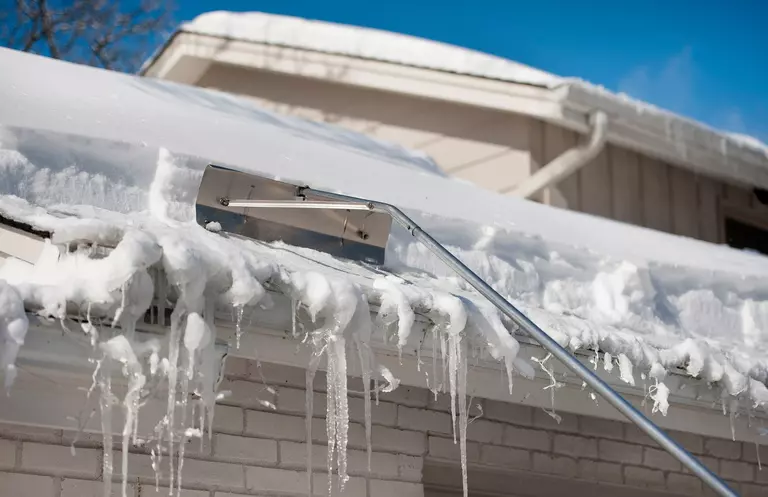
Finally, no matter how tempting it might be, don’t remove all the snow from your roof with your rake! It may seem counterintuitive, but this actually protects your roof.
The last thing you want to do is scrape your roof rake against your asphalt shingles or other roof surface, which can cause roof damage. You can leave an inch or two of snow on top of your roof without it threatening the roof’s integrity.
With these tips in mind, you’re well-prepared to prevent roof damage from snow all winter long. Of course, these roof snow removal strategies are only useful if your roof is still in great condition. If it’s already leaking or sagging, a full roof replacement is in order.
Window World of Mason City can assist with options like Owens Corning Total Protection Roofing System: perfect for enhancing your home’s durability and matching its current aesthetic. Contact us today or visit our showroom in person to learn more!